
Ground Up Development Finance | Residential | Commercial
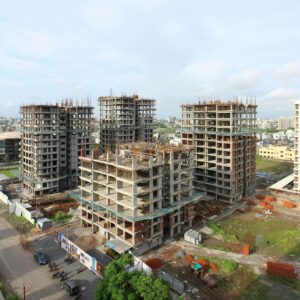
Ground-Up Development Finance
Ground-up development finance is a specialist short-term facility that funds new-build construction projects from land acquisition through to practical completion. Unlike a standard mortgage or bridging loan, ground-up finance is structured around the construction programme, releasing funds in staged drawdowns as the build progresses, so you only pay interest on capital that has been drawn. This staged approach keeps borrowing costs aligned with the pace of your project and gives the lender visibility over build quality and progress at every milestone.
Platinum Global Bridging Finance arranges ground-up development finance from £500,000 to £50 million for residential, commercial, and mixed-use new-build projects across the UK. We access specialist development lenders, challenger banks, private debt funds, and family offices through our panel of 100+ lenders, matching every project to the most competitive funding structure available. Indicative terms within 24 hours from our offices in London (64 Knightsbridge, SW1X 7JF) and Manchester (Railway House, Urmston, M41 6NA). No broker fee on facilities of £500,000 or above.
How Ground-Up Development Finance Works
A ground-up development facility is structured in two distinct components. The land loan, typically up to 65-70% of the site purchase price or current market value, is released at completion of the land acquisition. This is the “day one” advance that enables you to secure the site. The build facility, up to 100% of the agreed construction costs, is held in reserve and released in staged tranches as the build progresses. Each tranche is drawn down against surveyor-certified milestones, meaning the lender only releases funds for work that has been completed, inspected, and approved.
The total facility (land loan plus build facility) is capped at 65-70% of the Gross Development Value (GDV), the projected market value of the completed scheme. This GDV cap is the primary risk control for the lender: it ensures there is a sufficient equity buffer between the total debt and the completed value, protecting the lender’s position if the project underperforms or sales take longer than expected.
Interest is usually rolled up (added to the loan balance) rather than serviced monthly. This means you make no payments during the construction period. The full balance of capital plus accrued interest is repaid when the completed units are sold or the scheme is refinanced onto long-term investment finance. Some lenders offer the option to service interest monthly, which reduces the total cost but requires monthly cash flow during the build period when the project is generating no income.
The 2026 Ground-Up Lending Market
The ground-up development finance market has been rebuilding through 2025 and into 2026 after a cautious period, though lender appetite remains selective rather than expansive. According to the Bridging & Development Lenders Association, around 30 of its 57 lender members currently offer ground-up development finance, meaning a meaningful proportion of the specialist lending market chooses not to take construction risk at all, which is one of the reasons matching a scheme to the right lender first time matters more in this product category than almost any other. Brokers report enquiry levels steadily improving as borrowers and lenders gain confidence around pricing, build costs, and exit timing, with previously paused schemes, particularly regional residential and mixed-use developments, returning to market as investor demand outside London strengthens.
Pricing has eased alongside the Bank of England base rate, which fell from its 5.25% peak in August 2023 to 3.75% by early 2026. Senior ground-up development finance for experienced developers on mainstream residential schemes is currently accessible from approximately 6.5% to 9.5% per annum (0.65% to 0.90% per month) at the strongest end of the market, rising to 10-12% per annum for higher-gearing, less experienced, or more structurally complex schemes. One of the more notable 2026 developments is the return of stretched senior products, single-facility loans advancing to 70-75% of GDV without a separate mezzanine tranche, from challenger banks pricing at 9.5-12.5% all-in, a leverage point that had largely disappeared from the market between 2022 and 2024. For developers weighing up a two-tranche senior-plus-mezzanine structure against a stretched senior facility, see our mezzanine development finance page for a fuller comparison of the two routes.
What We Fund
Residential New Builds
Houses, apartments, bungalows, and mixed housing schemes, from single self-build projects to large-scale housing developments. Residential development finance is the most active sector in UK development lending, driven by the UK’s ongoing housing shortage. Government data shows the UK needs approximately 300,000 new homes per year to meet demand, but delivery consistently falls short at around 200,000-220,000, creating sustained opportunities for developers who can deliver new residential supply.
Commercial New Builds
Office buildings, retail units, industrial premises, warehouses, logistics facilities, and data centres. Commercial development finance is assessed primarily on the end-use, pre-let or pre-sale status, tenant covenant strength, and the development team’s track record in the relevant sector.
Mixed-Use Schemes
Developments combining residential and commercial elements, typically retail, office, or leisure space on the ground floor with residential apartments above. Common in urban regeneration areas across London (Stratford, Woolwich, Lewisham, Croydon) and major regional cities (Manchester, Birmingham, Leeds, Bristol, Liverpool).
Self-Build Projects
Individual homeowners building their own residence on a purchased plot. Self-build development finance provides staged drawdowns against the construction programme, with the exit being a residential mortgage on the completed home.
Lending Criteria
- Facilities from £500,000 to £50 million (some lenders from £250,000 for single-unit schemes)
- Up to 65-70% of site value (land loan / day one advance)
- Up to 100% of build costs (staged drawdowns)
- Total facility up to 65-70% of GDV (some challenger banks now stretching to 70-75% GDV on strong schemes)
- Terms from 12 to 24 months (longer terms considered for phased schemes)
- Interest rates from 6.5% to 12% per annum on the drawn balance, depending on developer experience and scheme strength
- Arrangement fees of 1-2% of the total facility
- Full planning permission required (some lenders fund subject to planning at higher rates and lower LTV)
- Experienced developers and first-time developers with strong professional teams
- Interest rolled up or serviced monthly, borrower’s choice
- Available to individuals, limited companies, SPVs, and partnerships
The Build Stage Process: How Drawdowns Work
Understanding how staged drawdowns work is essential for managing cash flow and keeping your project on track. The lender instructs a monitoring surveyor, an RICS-accredited chartered surveyor who is independent of both the borrower and the lender, to inspect the site at each drawdown stage. The monitoring surveyor confirms that the works have reached the agreed milestone, that the quality of workmanship meets the required standard, and that the project is progressing in line with the agreed build programme and cost schedule.
A typical residential ground-up scheme has 5-7 drawdown stages:
Stage 1: Site Preparation and Foundations
Demolition of any existing structures, site clearance, groundwork, drainage installation, and foundation construction. This is often the most variable stage: ground conditions can reveal unexpected issues (contamination, poor load-bearing capacity, underground obstructions) that increase costs. A contingency allowance of 10-15% of total build costs is essential to absorb these surprises.
Stage 2: Substructure and Ground Floor Slab
Construction of the substructure (below ground level), ground floor slab, and damp-proof membrane. At this point, the building footprint is established and the superstructure can begin.
Stage 3: Superstructure, Walls, Roof, and Windows
Brick/blockwork walls, roof structure and covering, and window installation. This stage represents the largest single drawdown and the point at which the building becomes watertight.
Stage 4: First Fix, Plumbing, Electrics, and Plastering
Installation of first-fix plumbing (hot and cold water pipework, waste pipes, heating pipework), first-fix electrics (cabling, back boxes, consumer unit), internal stud walls, insulation, and plastering.
Stage 5: Second Fix, Kitchens, Bathrooms, and Finishes
Installation of kitchens, bathrooms, sanitaryware, second-fix electrics (sockets, switches, light fittings), second-fix plumbing (taps, radiators, boiler commissioning), internal doors, skirting, architrave, and decoration.
Stage 6: External Works and Landscaping
Driveways, paths, fencing, turfing, planting, and any external structures. External works can represent 5-10% of total build costs on schemes with significant landscaping or infrastructure requirements.
Stage 7: Practical Completion and Snagging
Final inspection, snagging (identifying and rectifying minor defects), Building Control sign-off, and EPC certification. The monitoring surveyor issues a final certificate confirming practical completion.
The monitoring surveyor typically charges £500-£1,500 per visit, depending on scheme size. For a typical 5-7 stage scheme, total monitoring surveyor costs are £3,000-£10,000.
What You Need to Apply
Development finance applications require significantly more documentation than a standard bridging loan or mortgage:
The Development Appraisal
A detailed financial model showing site acquisition cost, total build costs (broken down by stage and trade), professional fees, contingency allowance (10-15%), finance costs, sales and marketing costs, and projected GDV supported by comparable sales evidence. The appraisal must demonstrate minimum developer’s profit of 15-20% on GDV.
Planning Documentation
Full planning permission including approved drawings, planning conditions, and Section 106 agreements. If you have a site without planning, pre-planning bridging can fund the land acquisition while the planning application is determined.
Build Costs and Programme
A detailed cost schedule broken down by trade and stage, ideally verified by an independent quantity surveyor (QS). A construction programme (typically a Gantt chart) showing sequencing, duration of each stage, critical path activities, and overall programme duration.
Contractor Details
The name and track record of your main contractor. A fixed-price or JCT build contract provides additional comfort to the lender because it transfers construction cost risk from the developer to the contractor.
Developer Track Record
Details of previous projects you have completed. If you are a first-time developer, the strength of your professional team substitutes for personal experience.
Exit Strategy Evidence
How you intend to repay the facility. For sale exits: comparable sales evidence and estate agent appraisals. For refinance exits: evidence of long-term finance availability such as a buy-to-let mortgage Agreement in Principle.
Development Finance Costs: A Complete Breakdown
Development finance is priced according to the project’s risk profile, the developer’s experience, and the LTV/GDV metrics:
- Interest: 6.5% to 12% per annum on the drawn balance only. For a £2 million facility with staged drawdowns over 18 months, the weighted average drawn balance might be £1.2 million, making the effective interest cost significantly lower than if the full facility were drawn on day one.
- Arrangement fee: 1-2% of the total facility, payable on completion or deducted from the initial advance.
- Exit fee: 0-1.25% of the total facility. Not all lenders charge exit fees; we prioritise lenders without exit fees.
- Monitoring surveyor: £500-£1,500 per visit, typically 5-7 visits = £3,000-£10,000.
- Valuation: £2,000-£5,000 depending on scheme size.
- Legal fees: £5,000-£15,000+ depending on complexity.
Total finance cost on a typical residential development is 8-12% of the total facility.
Worked Example: 8-Unit Residential Scheme
A developer acquires a site with full planning for 8 two-bedroom apartments. Site purchase: £600,000. Build costs (QS-verified): £1,200,000. Professional fees: £80,000. Contingency (12%): £144,000. Total project cost: £2,024,000. Projected GDV: £3,200,000 (8 apartments at £400,000 each).
Facility: land loan £420,000 (70% of site) plus build facility £1,424,000 = total £1,844,000 (57.6% GDV). Developer’s equity: £180,000. Interest: 7% pa on drawn balance. Term: 18 months. Arrangement fee: 1.5% (£27,660). Total interest: ~£105,000. Monitoring: £7,500. Valuation: £3,500. Legal: £10,000. Total finance cost: £153,660.
Sales revenue: £3,200,000. Total cost including finance: £2,177,660. Gross profit: £1,022,340. Profit as % of GDV: 31.9%. Exit: individual unit sales or development exit finance.
Risks and Challenges
Construction Cost Overruns
Build costs can exceed estimates due to unforeseen ground conditions, material price increases, subcontractor availability, or scope changes. A contingency of 10-15% provides a buffer, but costs exceeding this may require additional equity or mezzanine finance.
Programme Delays
Weather, planning conditions discharge, utility connections, contractor delays, and supply chain disruptions can extend the programme. Every month of delay adds interest cost. Take a facility term 3-6 months longer than planned to provide buffer.
Market Movements
Property values can change during the 12-24 month build period. The 15-20% profit margin required by lenders is designed to absorb moderate market movements without putting the lender’s capital at risk.
Planning Conditions
Planning permissions are typically granted subject to conditions that must be discharged before or during construction. Conditions relating to highways, drainage, ecology, or contamination can cause delays if not anticipated in the programme.
Planning Requirements
Most lenders require full planning permission before approving a facility. If you have a site without planning, pre-planning bridging can fund the acquisition while planning is determined. For permitted development conversions, the prior approval process (56 days for Class MA) is simpler and faster than full planning.
Frequently Asked Questions
Can first-time developers get ground-up finance?
Yes. Many lenders accept first-time developers provided the project is backed by an experienced main contractor, QS-verified build costs, and full planning permission. See our first-time developer finance page.
What deposit do I need?
Typically 30-35% of site purchase price. Mezzanine finance can reduce the cash equity needed, and some structures approach 100% development finance.
How long does approval take?
3-4 weeks for straightforward schemes. Complex projects may take 4-8 weeks.
What is GDV and why does it matter?
Gross Development Value is the total market value of the completed development. Lenders cap the facility at 65-70% of GDV. A scheme with GDV of £5 million supports a maximum facility of £3.25-£3.5 million.
Can I use development finance for a single house?
Yes. Minimum facility sizes start at £250,000-£500,000 depending on the lender.
What is the difference between development finance and a bridging loan?
A bridging loan is a single advance released on day one. Development finance provides staged drawdowns against a construction programme. For light refurbishment, bridging is simpler. For heavy refurbishment, conversions, and ground-up builds, development finance is the appropriate product.
What happens if my project runs over budget?
The developer must fund the overrun from their own resources. A contingency of 10-15% protects against this. For significant overruns, additional mezzanine finance may be available.
Can I retain completed units as buy-to-let?
Yes. The exit strategy can be a refinance onto buy-to-let mortgages rather than unit sales. Many developers use the BRRR approach: Build, Rent, Refinance, Repeat.
How many lenders are genuinely active in ground-up development finance?
Around 30 of the Bridging & Development Lenders Association’s 57 member firms currently offer ground-up development finance. This is a smaller pool than for standard bridging, which is why matching your scheme to the right lender at the outset avoids wasted time with lenders who do not take construction risk.
Does Platinum Global charge a fee?
No broker fee on facilities of £500,000 or above.
Our Development Finance Solutions
Ground-Up Development Finance · Refurbishment Development Finance · Permitted Development Finance · Development Exit Finance · Mezzanine Development Finance · 100% Development Finance · Residential Development Finance · Commercial Development Finance · First-Time Developer Finance · Development Finance London
Get a Quote
Contact Platinum Global Bridging Finance at 64 Knightsbridge, London or Railway House, Manchester for indicative terms within 24 hours. No broker fee on facilities of £500,000 or above.